What makes something timeless?
And why are so many of these things from the era of Mid Century Modern? Plus my top 5 timeless designs.

Better Home: Better Health with Michelle Ogundehin — helping you to harness the power of home for health, healing and happiness.

I believe that good design springs from a response to the context in which it is created — in other words, it reflects or reacts to the zeitgeist. However, truly great design, and therefore in my opinion timeless design, responds exclusively to the need to solve a problem; whether that is to sit in comfort or to be able to pour tea without drips.
But to really understand why some things become eternally venerated on the podium of timelessness, and many do not, it helps to consider the opposite fate — built-in obsolescence.
Regrettably, the idea that something could be designed deliberately to fail, seems acutely symptomatic of the fast pace of contemporary life. It is the very essence of the take-make-waste approach; the siren call of the constant upgrade exploiting a perceived need to do everything faster or differently in some way. It is a lure to consume based on embedding the notion that what you have already is outmoded. Therefore to stay on-top, if not to stay meaningful, you must immediately switch up to the new and improved latest edition.
What tosh.
Of course, some might argue that if you have five years of use from a product, then surely that's good enough. But we expect our buildings and homes to last a lot longer than half a decade, so why not everything else? Why is it seemingly 'ok' to buy anything ‘throwaway’? Indeed, a 2012 report by the Ellen MacArthur Foundation, champion of the ‘circular economy’ model of re-use, revealed that unbelievably, 80 per cent of the goods bought in a year by one person are not returned for any further economic use, ultimately ending up in incinerators, landfill or wastewater. This is no way to go on.
Let us not forget too, the thorny influence of trends — the pendulum swing of what’s deemed 'in' and then 'out' — generally just another incitement to the unwitting to purchase beyond their requirements. Although I must make a distinction here between the smaller flights of fashionable whimsy — hot new colours, finishes, fabrics and new season styles — that are nothing more than marketing; and the larger shifts of cultural change — climate change, water scarcity, migration, the inexorable march of technology — that inevitably impact every aspect of lifestyle, and so prompt adaptation.
Built-in obsolescence on the other hand is nothing more than a manifestation of the cult of convenience that increasingly characterises the 21st Century. In this way, the design driver has become less about service and more about status (for the designers as well as the consumers!). Sadly, this won't change until the incentive to not sell more of something, but to instead extend a product's longevity, and keep it in circulation for as long as possible, becomes the norm.
After all, this is how it used to be.
Let's jump back to the early 1950s, as many stalwarts of 'timeless' design seem to hail from this era. Ironically, this was a time when the primary motivator was a vision of a new and improved future for all. It was also a moment of great confidence and optimism that modern design could play a pivotal role in shaping a better society. And yet, despite this enthusiastic quest for the new, the idea of designing something to be wantonly discarded after a season or two was anathema. Rather, this was about thinking beyond the moment and innovating for the common goal of a glorious tomorrow.
Of vital note is the fact that plastic was not a mainstream material at this point. That didn't happen until the late 60s, early 70s.
As such, many designs were creatively inspired by a bid for efficiency, a love of ergonomics and function, and the draw of materials like stainless steel, which epitomised a shiny ‘New Look’ for the home, alongside more traditional rosewood and rattan. It was a forward-looking approach that sat respectfully on the shoulders of history. The motivation being not to create icons, but simply the desire to create something more elegant, affordable or useful than that which had come before.
In this way, whether we look at Robert Welch’s Campden coffee set, Hans Wegner’s Flag Halyard chair (my dream seat!), the walnut stools designed by the Eames’ for the Time Life Building in New York, Eero Saarinen’s Tulip tables or Sori Yanagi’s sinuous Butterfly stool, to name my top five absolute favourite timeless designs, it is impossible to date them. They are as relevant today as they were when first designed upto seventy years ago!
As the saying goes, "things of quality have no fear of time"
Ultimately then, such inherent longevity comes from honesty. Such pieces are not trying to seduce the consumer into buying something they do not need. They exist only to say, we do what we do exceptionally well, and we are considered in every detail; treasure us, and we will last a lifetime.
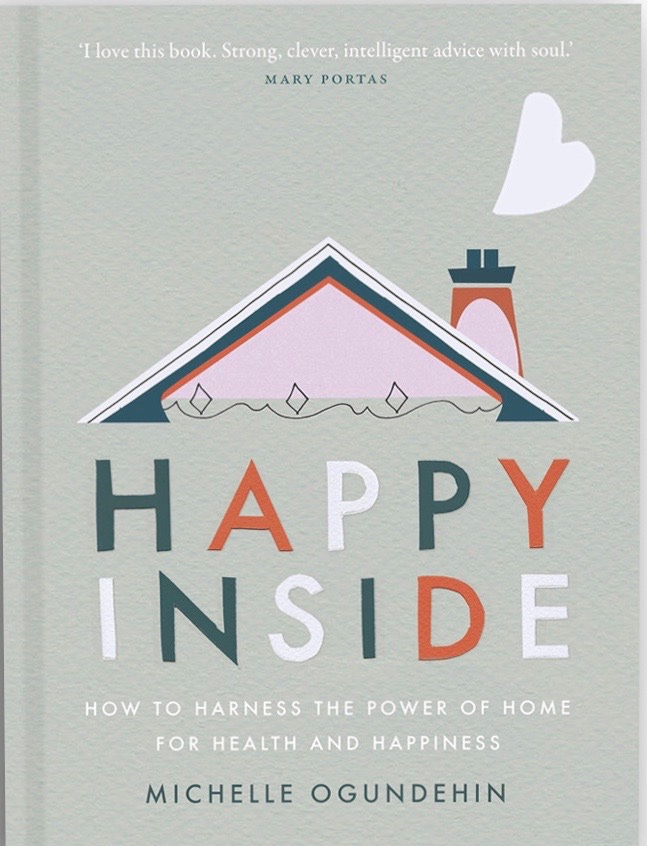
PS For more practical wisdom and home intel for every space, you might like my book: Happy Inside: How to Harness the Power of Home for Health and Happiness. It’s your one-stop guide to living well, at home!