
A fragrant illusion
When "clean" acquired a scent, and "natural" became a marketing claim

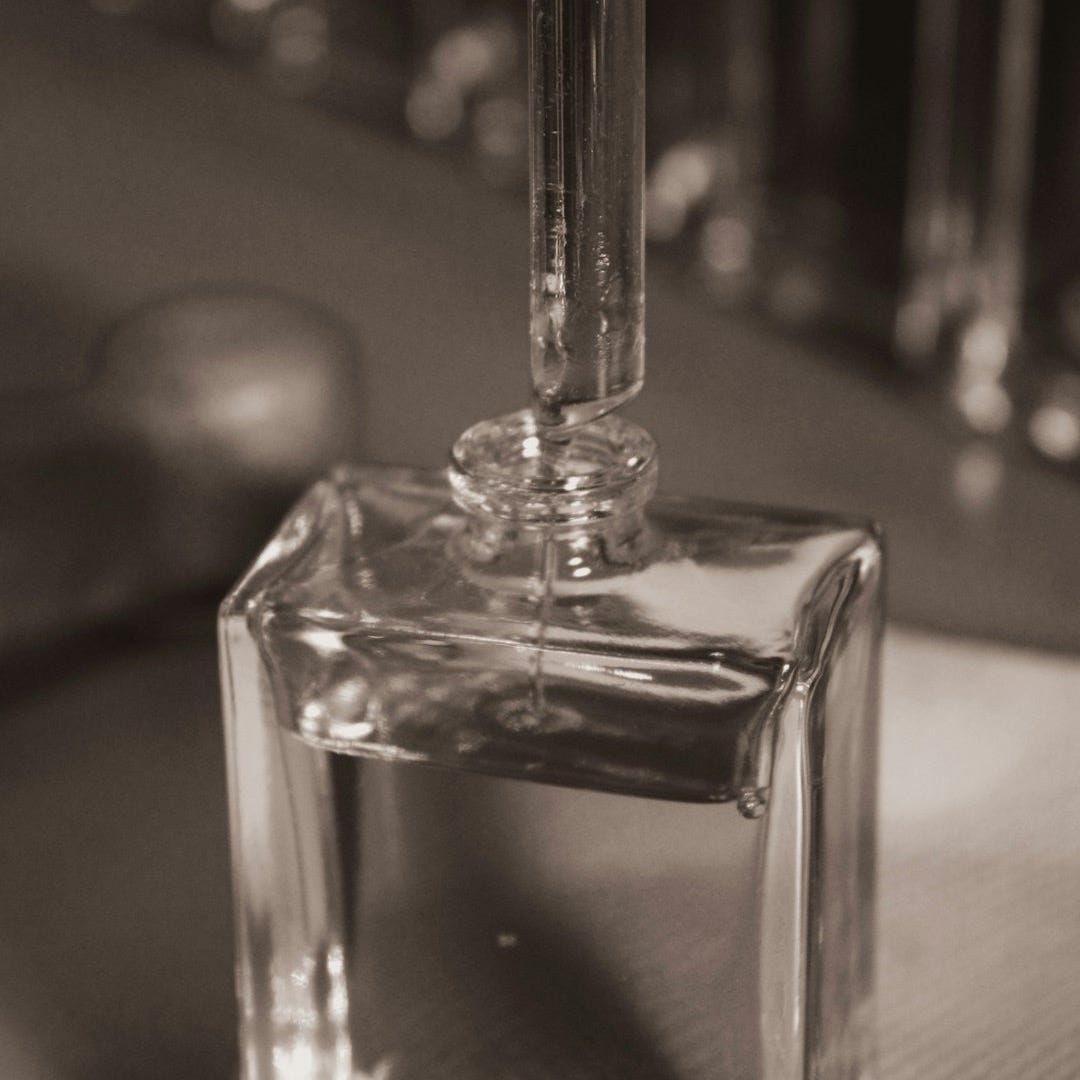
What does clean smell like? It’s a simple question, but one that reveals just how successfully we’ve been sold a myth. Because, for most of human history, clean didn’t smell of anything in particular. It meant washing dried outside in the sun; soap, water and open windows. Clean was simply the absence of unpleasant odours.
Then somewhere along the way, clean acquired a scent. “Fresh Linen”. “Spring Meadow”. “Cotton Breeze”. But why should a freshly washed towel smell like “Vanilla Cashmere” (whatever that might be)? The result is that today many homes contain layer upon layer of such scent from laundry products and fabric conditioners to cleaning products, candles, diffusers and room sprays; not forgetting any perfume, deodorant, aftershave and scented body products we might use on ourselves too.
What’s the big deal? Well, the scent is often hidden behind a single word: parfum, or fragrance. And that one word can represent a complex blend of dozens, sometimes hundreds, of chemicals. Yet manufacturers are not legally required to disclose what they are because fragrance formulations are protected as trade secrets!
Unfortunately, such ‘fragrance’ appears to be one of the few areas where otherwise highly conscious consumers abandon their curiosity. While we may read food labels looking for sugar, salt, preservatives or additives, many of us think nothing of spraying such undisclosed potential toxins directly onto our skin, our clothes, our bedding and into the air that we breathe.
And, the more luxurious the product appears, the less likely we are to question it.
After all, a beautifully designed perfume bottle displayed beneath the twinkling lights of an upmarket department store feels sophisticated and trustworthy. A premium scented candle wrapped in elegant packaging feels indulgent and reassuring. One of these new breed of “designer” cleaning or laundry products, feels ridiculously aspirational. But prestige is not transparency. And research has linked many synthetic fragrance ingredients to skin irritation, allergies, headaches, asthma and concerns around hormone disruption (see post below). For sure the science continues to evolve, and while each individual exposure may be small, the cumulative load is something else entirely.
Lets talk about hormone disruptors

You’re probably familiar with the headlines about breast cancer: there are drugs available to treat it; mammograms can detect it; and a healthy diet can go some way to prevent it. Indeed, breakthrough advances in detection, surgery and drugs are adding years to women’s lives, but in the UK the data is still sobering…
Adding to the confusion is the rise of products marketed as “natural” using words like botanical, plant-based and pure, wrapped in eco-friendly packaging replete with leaves, flowers and earthy colours. The marketing looks green, but the products themselves are not always what they seem because many still rely heavily on synthetic fragrance compounds to create their scent.
What does this mean in practice? The wax may be organic soy or coconut (I think I’ve banged on long enough about the petroleum derivative paraffin wax for you to know already this is a toxic no-go). The packaging may be recycled cardboard. The ingredients may even be partly plant-derived. Yet the fragrance itself may still come from a laboratory-created blend of scent molecules designed to mimic or enhance aromas found in nature. In other words, that candle may smell of lavender without actually containing much, if any, real lavender. The scent has been engineered rather than extracted. But we read lavender, and assume all is well.
Ultimately, these complex, undisclosed chemical blends serve little purpose but to hoodwink us. They don’t make our clothes cleaner, our homes healthier or our skin better cared for. Their job is simply to make us believe that those things are true.
And perhaps this is where we’ve gone wrong? We’ve treated scent as decoration rather than communication. For thousands of years humans have used aromatic plants, resins, flowers and herbs not simply because they smelled pleasant, but because they altered how a space felt. Rosemary to sharpen attention. Citrus to uplift. Cedarwood to ground. Scent was used intentionally. Today much of what passes for fragrance has become disconnected from that original purpose. Instead of asking how we want a room to feel, we buy products designed to make a room smell like an abstract marketing concept.
But scent can be so much more than marketing. Used thoughtfully, it can become another tool for shaping the atmosphere of a home, supporting mood, signalling transitions, and creating rituals that help us feel more grounded, focused or restored. The question isn’t whether our homes should smell of something, it’s whether the scent has been chosen with intention. Because there’s a world of difference between a home fragranced by a laboratory’s interpretation of nature and one scented by nature itself.
PS Of course any naturally occurring substance can trigger reactions in some highly-sensitive individuals, but essential oils offer complete transparency. Lavender oil is lavender oil. Sweet orange oil is sweet orange oil. You know what is creating the scent because the source is clearly identified. Add in organic, and you’re doing even better. And know that any maker who genuinely uses pure plant-derived wholesome scents, will be shouting it loud and proud on their packaging.
A final note, because I know you’ll ask: what do I use?
Most of the time, I keep things very simple. I have an oil burner and add a few drops of whichever essential oils suit my mood or the season. Currently it’s Rosemary, Clary Sage or Juniper Berry to give me a boost.
More recently, however, I’ve fallen in love with wax melts. They are such an efficient way to infuse a space with scent (none of the problem of a candle wick burning down the middle only of a candle!), particularly if you’re looking for something a little more layered and sophisticated than a single oil. As such, one of my favourite discoveries has been ReWild Botanicals. Blends crafted entirely from raw plant ingredients and essential oils (rather than a laboratory recreation of them) and meticulously chosen for their natural therapeutic properties, designed around how you want to feel — calmer, more grounded, more focused, more restored.
In fact, Kiri and I have been having some fascinating conversations about the role scent can play in supporting wellbeing at home. More on that soon.
PS if you enjoyed this post then please do hit the ❤️ button - it shares the love by making it more visible to non-subscribers. Thank you!
BTW My website brings all the varied facets of my world together in one place — the books, the Club, my collaborations, my Amazon Shop — michelleogundehin.com

Regarding your comment about candles only burning down in the middle. There is a solution! This is called tunnelling. To prevent it happening so starkly, ensure that when you first burn the candle you burn it for a full 3 hours or however long it takes for the entire surface to melt. Subsequent burns , even if they are shorter, should mean the candle melts much more evenly. This has certainly been my experience.
The "natural" claim drives me nuts. Cyanide is a naturally forming compound of carbon and nitrogen. In some of its compounds it smells pleasantly of almonds. It is perfectly natural but I don't think that makes it something I want knocking around my house other than in some fruit seeds. "Natural" does not necessarily equal "Good" and is a massively over- and ill-used term.